
So many decisions…
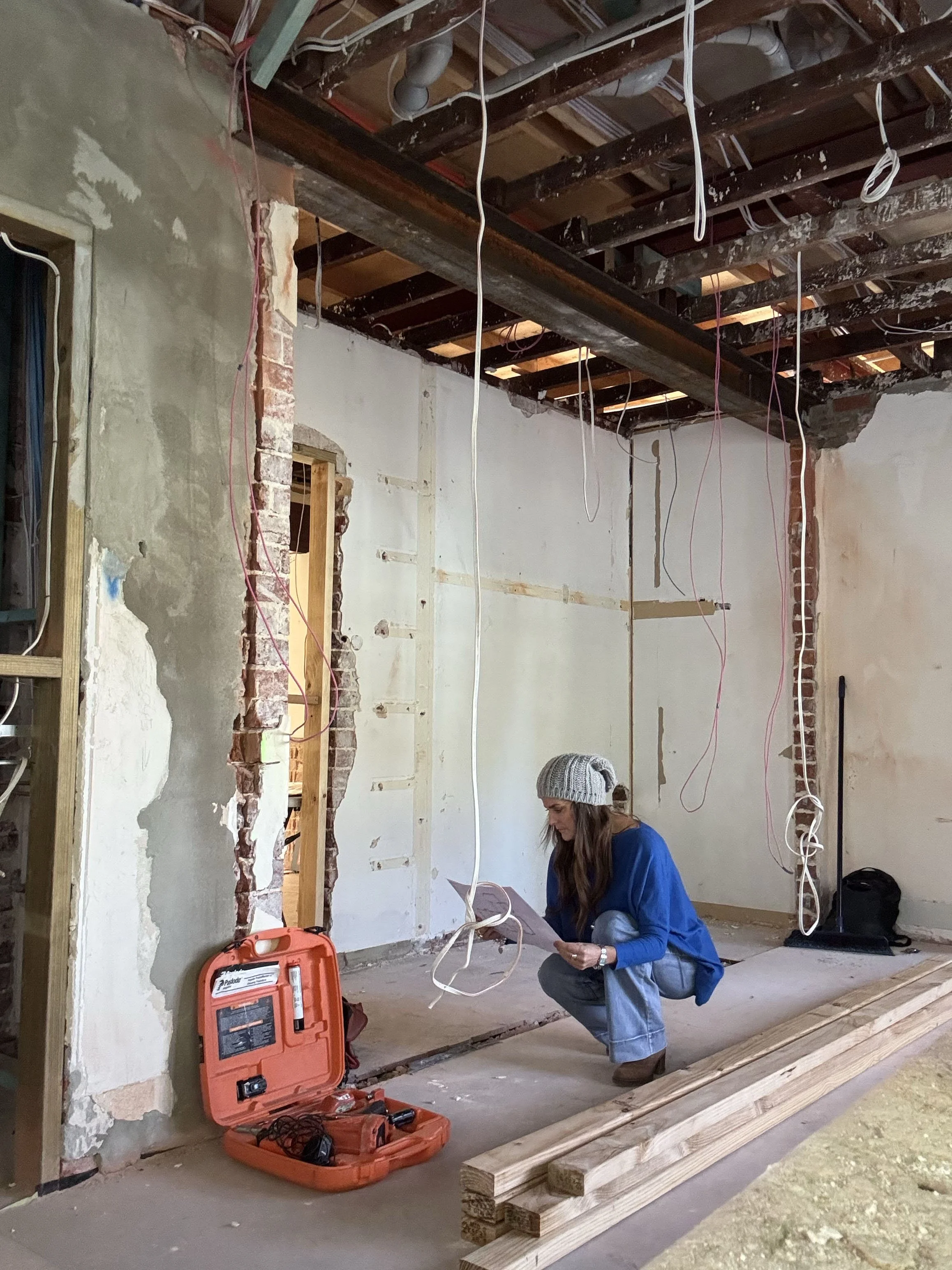
People sometimes imagine that being an Interior Designer involves spending your days choosing beautiful fabrics, visiting showrooms and deciding which gorgeous piece of furniture should go where. And yes, there is some of that.
There are also endless collecting of samples, technical drawings, measurements, spreadsheets, phone calls, delivery schedules, site visits and the occasional moment when you discover that something you carefully selected doesn’t quite work once it arrives.
There is a lot of invisible work behind a finished interior. Decisions that clients never see. Problems that are quietly resolved. Details that take far longer than anyone expected.
And a surprising amount of standing in a room staring at something while everybody waits for you to say what you’re thinking.
Sometimes I know immediately what needs to change. Other times I need to look at it from another angle, walk outside, come back in and look again.
I have learned not to rush that part.
Of course, there are days when the work really is as lovely as people imagine. Looking through beautiful fabrics, discovering a new finish, finding the perfect piece of furniture or seeing a collection of selections come together exactly as you had pictured them. Those are the moments that make you remember why you love what you do.
But getting to that point can involve an extraordinary amount of work that isn’t particularly photogenic.
Nobody is rushing to photograph a spreadsheet. A folder full of cabinetry drawings doesn’t tend to attract much attention on Instagram. And while I can appreciate a beautifully organised sample library, I’m not sure it would make a particularly compelling social media post.
Although, given the number of hours I’ve spent looking for a missing sample, perhaps I shouldn’t rule it out.
Then there are the decisions. So many decisions.
The difference between two finishes that look almost identical until you put them next to each other. The question of whether a particular stone works with the cabinetry, whether the flooring is too warm, or whether the lighting is going to make everything look entirely different once the sun goes down.
And, of course, the whites.
There are a remarkable number of whites in the world. Warm whites, cool whites, creamy whites, chalky whites and whites that look perfectly lovely on a sample but somehow become a completely different white when you put them against the wall.
Choosing one should be straightforward. It rarely is.
The trouble is that the smallest decisions can have a surprisingly large effect on how a room feels. A finish that is just slightly too cool, a light fitting that hangs a little too low, or a piece of furniture that is a fraction too large can change the balance of an otherwise beautiful space.
Which is why I can spend an unreasonable amount of time thinking about something that other people might not even notice.
And sometimes, that is precisely the point. When everything works together, you don’t necessarily notice each individual decision. You simply walk into a room and feel that it works.
Getting it to that point is another matter entirely.
The finished photograph might show a beautiful room with everything in its place. It doesn’t show the adjustments, the reconsidered selections, the samples spread across the floor or the forty minutes spent trying to decide whether a particular white is the right white.
“The difference between two finishes that look almost identical until you put them next to each other. ”
It doesn’t show the measurements taken three times, just to be certain. Or the time spent checking that the beautiful piece of furniture will actually fit through the doorway. Or the conversations required to make sure that what looks wonderful on paper will work in real life.
And it certainly doesn’t show the amount of time spent moving things around until they feel right.
This is also where the glamour of the profession can become a little questionable. There are days when you’re visiting beautiful spaces and working with gorgeous materials. And there are days when you’re standing on a building site in shoes that were absolutely not designed for the occasion, trying to work out why something doesn’t line up.
Both are part of the job.
I suspect one of the occupational hazards of being an Interior Designer is that you never entirely switch off. You can walk into a restaurant for lunch and find yourself noticing the lighting, the proportions of the room, the chairs, the artwork and the way the tables have been arranged.
You might even spend a little time wondering why they hung a beautiful pendant light at totally the wrong height.
Meanwhile, the person you’re having lunch with is wondering why you’ve gone quiet. I’m not sure there is a cure for this.
Hotels are particularly dangerous. I can barely check into a beautiful hotel without looking at the joinery, examining the finishes, noticing the lighting and wondering who designed the interiors. I can appreciate the room as a guest, of course, but there’s usually a small part of my brain quietly taking notes.
It’s not always a bad thing. Looking closely at the world around you is part of what makes you better at what you do. Inspiration doesn’t always come from a showroom or a design magazine. Sometimes it’s a detail in a hotel corridor, a clever use of space in a restaurant or a combination of materials you hadn’t considered before.
The difficulty is remembering that you’re supposed to be on holiday. Still, I wouldn’t have it any other way.
There is enormous satisfaction in seeing a project come together, particularly when the finished space feels effortless. When the colours, materials, furniture and lighting all work together, and the room feels as though it couldn’t possibly have been any other way.
That is the part I love.
But effortless and easy are two very different things.
And if I’ve learned anything over the years, it’s that the difference between a room that looks good and one that feels right can come down to the smallest of details.
Sometimes I know immediately what those details need to be.
And sometimes I need to move something four centimetres to the left. Again.
