
The Art of Cacio e Pepe…
There are certain dishes you eat while travelling that stay with you long after the holiday is over. Not necessarily because they are elaborate or particularly beautiful to look at, but because they taste so good, that you find yourself thinking about them weeks later. Cacio e Pepe was one of those dishes for me in Rome.
I’ve certainly eaten my fair share of pasta in Italy, but there was something about eating this particular dish, in the city it belongs to, that made me appreciate it in an entirely different way. Perhaps it was the setting, perhaps the ingredients, or perhaps it was simply the pleasure of eating something that has been part of a city’s culinary identity for generations.
Whatever it was, I came home thinking about Cacio e Pepe. And, more importantly, how to make a really good one.
Three ingredients. That’s it.
Cacio e Pepe translates, quite literally, to cheese and pepper. It’s one of Rome’s most celebrated pasta dishes, and the traditional version is wonderfully uncomplicated: pasta, Pecorino Romano and freshly cracked black pepper.
No cream. No butter. No garlic. No elaborate sauce requiring a long afternoon in the kitchen.
The magic happens when the sharp, salty sheep’s milk cheese meets the pepper and a little of the starchy water used to cook the pasta. With the right technique, these simple ingredients become a silky, almost impossibly creamy sauce that clings to every strand.
And this is where things get interesting. Because although the ingredients are few, getting the sauce right takes a little skill. Too much heat and the cheese can turn grainy or clump together. Too much water and the sauce becomes thin. Too little and you’re left with a rather disappointing tangle of pasta and cheese.
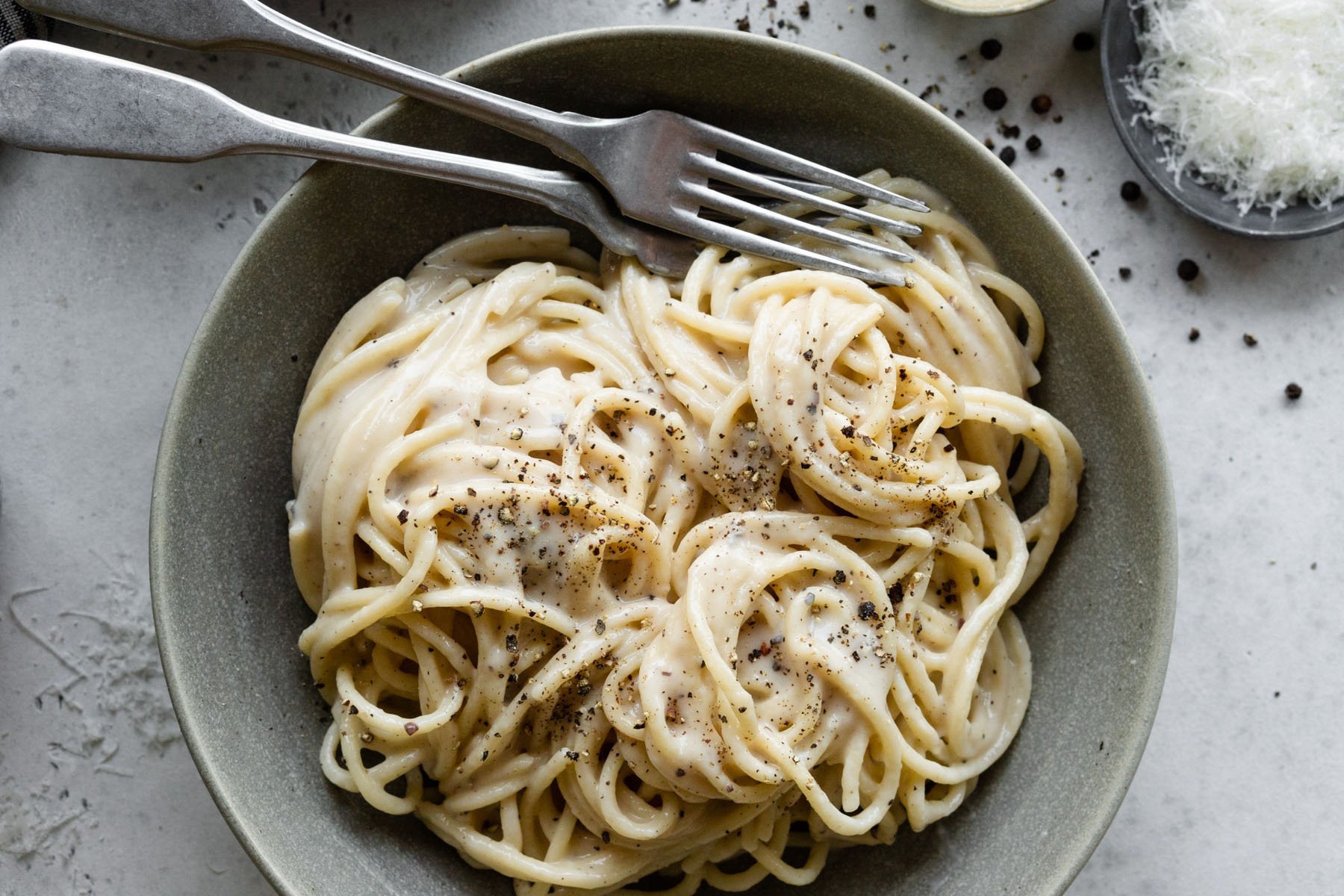
The aim is a smooth, glossy coating, with enough pepper to give it a gentle warmth and enough Pecorino to deliver that unmistakable savoury richness.
When it’s done properly, it’s extraordinary.
Like so many of the best Italian dishes, Cacio e Pepe is closely associated with a tradition of making delicious food from simple, practical ingredients.
Its origins are commonly linked to the shepherds of the Roman countryside and the seasonal movement of their flocks. During these long journeys, they needed provisions that were nourishing, portable and unlikely to spoil. Dried pasta was easy to carry, aged pecorino kept well, and black pepper added flavour and warmth.
Over time, this uncomplicated combination became part of the food culture of Rome and the surrounding Lazio region, finding its place on the tables of traditional neighbourhood trattorias.
“Like so many of the best Italian dishes, Cacio e Pepe is closely associated with a tradition of making delicious food from simple, practical ingredients.”
The precise history is a little more complicated than the familiar shepherd’s tale suggests, and the dish’s exact origins are difficult to establish with certainty. But its connection to the pastoral traditions and rustic cooking of central Italy is an important part of its story.
There is something rather wonderful about that. A dish born from practicality has become one of the most recognisable expressions of Roman cooking.
It also says something about Italian food more broadly. Great cooking doesn’t always require a long list of ingredients or a clever new technique. Sometimes, it requires knowing your ingredients, understanding how they work together and resisting the temptation to add anything unnecessary.
There are variations across Rome, including the use of spaghetti and the thicker, square-cut tonnarelli favoured by many traditional restaurants. Both have their place. The important thing is to respect the simplicity of the dish and let the quality of the ingredients do the work.
I suspect this is one of those recipes that improves with practice. The first attempt might not be perfect, but once you understand the balance between cheese, water, pepper and heat, you’ll begin to see why Romans have such strong opinions about their pasta.
And if a dish can inspire that much devotion with just three principal ingredients, it deserves a little respect.
For me, Cacio e Pepe is now firmly on my list of dishes I’m looking for, whenever I’m in Rome. Until then, I’ll be trying to perfect that little bit of “Roman magic” at home.
Cacio e Pepe
Serves: 2
Preparation: 10 minutes
Cooking: 12–15 minutes Ingredients
200 g spaghetti or tonnarelli
100 g finely grated Pecorino Romano
1–2 teaspoons whole black peppercorns, freshly cracked, to taste
Salt, for the pasta water
Note: Pecorino Romano is naturally quite salty, so go easy on the salt in the cooking water. Method
Prepare the pepper and cheese.
Coarsely crush the black peppercorns using a mortar and pestle. Finely grate the Pecorino Romano, making sure there are no large pieces remaining. A fine grating helps the cheese combine more smoothly.
Cook the pasta.
Bring a pot of water to the boil, salt it lightly and cook the pasta until just al dente, following the packet instructions. Before draining, reserve at least two cups of the starchy cooking water. You’ll need it for the sauce.
Make the pepper fragrant.
Place the cracked pepper in a large frying pan over a low to medium heat for about 30–60 seconds, until fragrant. Add a small splash of pasta water and swirl the pan. Remove it from the heat while you prepare the cheese.
Create the cheese mixture.
Place the finely grated Pecorino Romano in a bowl. Gradually add a little lukewarm pasta water, stirring continuously until you have a thick, smooth paste. Avoid adding boiling water directly to the cheese, as excessive heat can cause it to clump.
Bring everything together.
Transfer the drained pasta to the pan with the pepper and a little of its cooking water. Toss well to coat the strands.
Allow the pan to cool slightly off the heat, then add the Pecorino mixture a little at a time, tossing continuously. Add small splashes of pasta water as needed until the sauce becomes smooth, glossy and creamy.
The key here is patience. Don’t rush the cheese into a very hot pan, and don’t be tempted to add cream or butter to rescue the sauce. The pasta water should do the work.
Serve immediately.
Twirl the pasta into warm bowls, finish with a little extra freshly cracked black pepper and, if you like, a light dusting of Pecorino Romano.
Buon appetito!
